Sélectionner une page
Desire and the self

Desire and the self

PHILOSOPHY · 12 MIN READ

How desire shapes our identity, and what it reveals about being human.

We tend to think of desire as something that belongs to us. I want this. I love that. I am attracted to this person. I want to live here, become this, experience that. Desire seems to emerge from somewhere private and interior, carrying information about who we really are. We treat our desires almost as evidence of identity: if I can understand what I truly want, I might understand myself.

But desire becomes much stranger when we look at it closely. Where do our desires actually come from? Why do certain objects become charged with longing while others remain indifferent to us? Why can something we barely noticed become intensely desirable the moment someone else wants it? Why do entire populations begin wanting similar bodies, lifestyles, experiences or versions of success at roughly the same historical moment?

And what does it mean when the thing we thought would satisfy us finally becomes ours, only for desire to quietly reorganize itself around something else?

The question is not simply What do I want? A more unsettling question sits underneath it: Who is the “I” that wants?
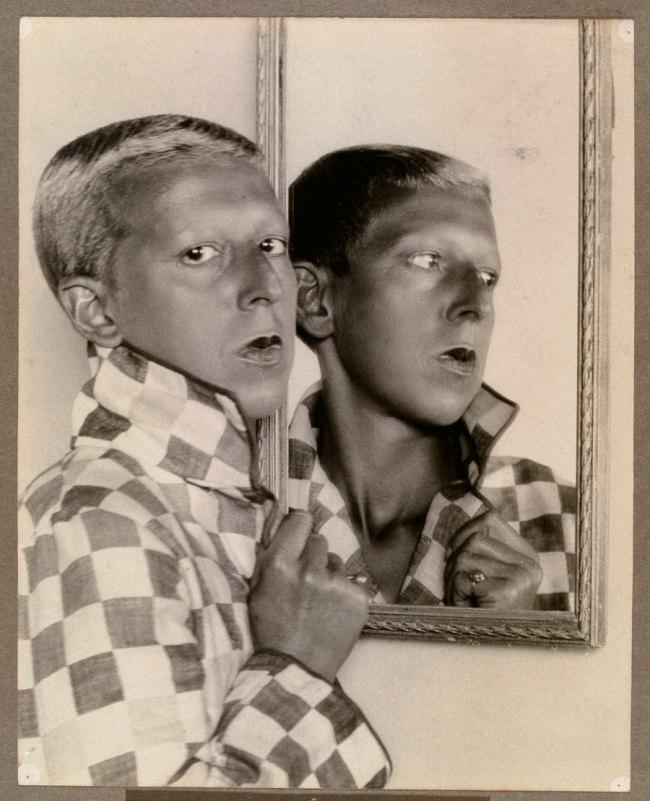
 

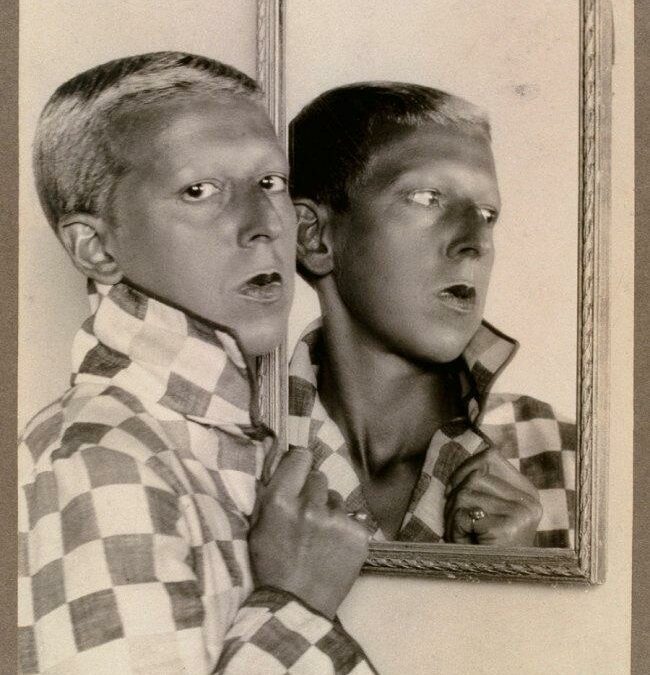
Claude Cahun Self-portrait (as a dandy head and shoulders)Art Blart _ art and cultural memory archive


DESIRE HAS A HISTORY

There is no single theory of desire. Philosophy, religion, psychoanalysis, anthropology and neuroscience approach it from radically different directions, and even the word itself gathers together experiences that may not belong to one category: hunger, erotic attraction, ambition, craving, curiosity, attachment, longing, devotion.

Still, one assumption appears repeatedly in contemporary life: that desire originates inside the individual.

We imagine an autonomous self encountering the world, discovering preferences and making choices accordingly. Desire moves from inside to outside. First there is me, then there are the things I want.

But many philosophical and social traditions complicate this picture. Desire may not simply express a pre-existing self. It may participate in producing that self.

Think about how often identity is narrated through preference. The music I listen to, the people I desire, the clothes I wear, the food I eat, the city in which I choose to live, the work I want to do. Consumer societies have become extraordinarily sophisticated at turning preference into identity. We no longer simply buy objects. Objects become ways of saying something about ourselves.

Taste begins to resemble personality.

This does not mean our desires are fake. It means that the distinction between what comes “from us” and what comes “from culture” is much harder to draw than we usually imagine.

We learn what is desirable long before we are capable of analysing desire itself. Families, stories, religions, films, advertisements, social classes, gender norms and now algorithmic feeds continually place images of desirable lives before us. They show us bodies worth having, relationships worth pursuing, homes worth inhabiting, experiences worth collecting.

Culture does not simply tell us what exists.

It teaches us what to notice.


WE LEARN TO WANT

The French thinker René Girard developed one particularly provocative account of this problem. For Girard, desire is often mimetic: we learn what to desire partly by observing the desires of others.

We imagine a direct relationship between ourselves and an object: I want that. Girard inserts a third element into the structure. There is the person who desires, the desired object and another person whose desire helps make that object desirable.

A child ignores a toy until another child begins playing with it.

Suddenly the toy matters.

The object has not changed. Its position within a social field has.

Adult desire can be considerably more sophisticated, but not necessarily less mimetic. A restaurant becomes difficult to book and therefore more desirable. A remote destination appears repeatedly on our feeds and enters our imagination. A particular body becomes culturally idealized. A neighbourhood becomes fashionable. An object becomes a status symbol because particular people possess it.

We desire not only things, but the meanings attached to things.

And sometimes we desire the person we imagine we could become by possessing them.

This becomes especially visible online. Social media does not merely show us what other people have. It gives us continuous access to what other people appear to value. We encounter thousands of small signals every day: this body deserves attention, this place is worth visiting, this morning routine is admirable, this relationship is enviable, this version of a life is successful.

The extraordinary thing is that after enough exposure, socially transmitted desire can feel completely intimate.

We say: I have always wanted this.

Maybe we have.

But it is worth asking who taught us the language in which that wanting became imaginable.£


DESIRE DOES NOT END WHEN WE GET WHAT WE WANT

There is another peculiar quality to desire: satisfaction rarely seems to abolish it.

We want the job. We get the job.

We want the person. The person loves us back.

We want the house, the journey, the recognition, the body, the number in the bank account.

For a moment, the movement stops.

Then another desire appears.

This is not simply greed or personal failure. Philosophical and religious traditions noticed the instability of satisfaction long before consumer capitalism learned how profitable it could be.

In early Buddhist thought, taṇhā, often translated as craving or thirst, occupies a central place in the analysis of suffering. The problem is not that every form of wanting is morally wrong. Buddhist traditions make important distinctions between different forms of aspiration and desire. The deeper problem concerns craving entangled with grasping: the attempt to secure lasting satisfaction through phenomena that are themselves impermanent.

The desired object changes.

The desiring subject changes.

The pleasure changes.

And still we ask the experience to remain.

There is a strange asymmetry here. Before obtaining something, we imagine possession as an endpoint. After obtaining it, possession becomes the new beginning.

Desire moves.

This movement has become deeply embedded in contemporary economic life. Consumer culture does not function particularly well if satisfaction lasts forever. The ideal consumer must be satisfied enough to continue believing in consumption, but not so satisfied that wanting ends.

The new object promises resolution.

Then becomes ordinary.

Another appears.

The cycle begins again.


THE SELF THAT EXISTS IN THE FUTURE

Desire also has a temporal structure.

To desire is often to imagine a future in which something is different.

When I live there.

When I have enough money.

When my body looks like that.

When I meet someone.

When my work succeeds.

When I finally become disciplined, healed, enlightened, free.

Desire creates a distance between the person I am and the person I imagine I could become.

That distance can be extraordinarily generative. Without desire, there would be little movement toward learning, creation, love, political change or transformation. Desire can pull a life beyond its existing boundaries.

But the same structure can create a peculiar postponement.

The present self becomes a provisional self.

Not quite there yet.

The real life waits somewhere ahead.

This is especially visible in contemporary self-development culture, where the object of desire is increasingly the self itself.

We do not simply want things.

We want to become a better version of the person who wants them.

More conscious. More attractive. More productive. More regulated. More spiritual. More successful. More authentic.

The self becomes both subject and object of desire.

I am the person doing the improving and the material being improved.

There is no obvious endpoint to such a project.


WHAT IF DESIRE CREATES THE SELF?

This reverses the way we usually tell the story.

Instead of assuming that a stable self exists first and then produces desires, we might ask whether repeated patterns of desire help create the experience of having a self.

I want this.

I avoid that.

I love these people.

I reject those values.

I pursue this kind of life.

Over time, these movements accumulate into something that feels like identity.

This is one reason losing desire can be so disorienting. When a relationship ends, a career loses meaning or an ambition that organized years of our lives suddenly disappears, the loss can exceed the object itself.

We have lost a structure around which the self was organized.

Who am I if I no longer want what I spent ten years wanting?

The question reveals something important. Desire does not merely point toward objects.

It gives direction to the person desiring them.


ANCIENT INDIA ASKED A DIFFERENT QUESTION

Indian philosophical traditions contain remarkably diverse accounts of desire, and collapsing them into a single “Eastern” position would erase important disagreements between them.

In the Bhagavad Gītā, desire appears within a larger investigation of action, attachment and liberation. The text does not simply instruct Arjuna to stop acting. He must act. The problem concerns the relationship between action and attachment to its fruits.

This distinction is subtle.

A life without action is impossible. Action continually produces consequences, and human beings naturally care about those consequences. Yet when identity becomes tightly bound to a particular result, action can become a source of bondage.

I need this to happen.

I need this person to respond in this way.

I need my work to succeed.

I need the future to confirm the image I have constructed of myself.

The action may be appropriate. The desire may even be understandable.

The attachment changes the structure of the experience.

Patañjali’s Yoga Sūtra approaches desire through another conceptual vocabulary. Rāga, commonly translated as attachment or attraction, is listed among the kleśas, the afflictive patterns that disturb perception. In Yoga Sūtra II.7, rāga is associated with the residue of pleasurable experience: having experienced pleasure, consciousness is drawn toward its repetition.

This is psychologically fascinating.

We do not simply desire pleasure.

Memory participates in desire.

Something happened. It felt good. The mind retains the trace and begins leaning toward its return.

The past starts organizing the future.

BUT DESIRE IS NOT ALWAYS THE ENEMY

It would be misleading, however, to turn this into the familiar statement that “Indian philosophy teaches us to eliminate desire.”

There is no single Indian philosophy, and attitudes toward desire vary enormously.

Certain renunciatory traditions place considerable emphasis on detachment from craving and sensory attachment. Yet other traditions treat desire much more ambiguously. The Sanskrit concept kāma can refer to desire, sensual pleasure, love and erotic enjoyment, and it appears as one of the classical puruṣārthas, the legitimate aims of human life, alongside artha (material prosperity), dharma (ethical/social order and duty) and mokṣa (liberation).

Certain Tantric traditions complicate the picture further. Rather than assuming that embodied experience must simply be rejected, some Tantric frameworks work through sensation, affect, embodiment and desire within particular ritual and philosophical systems.

The interesting question therefore becomes less Is desire good or bad? and more:

What kind of relationship do we have with what we desire?

Can desire move through us without becoming identity?

Can pleasure be experienced without demanding permanence?

Can longing exist without immediately becoming possession?

Can we want something deeply without believing our completeness depends upon obtaining it?

Those questions are harder than simply renouncing desire.

THE ECONOMY OF DISSATISFACTION

The question becomes even more complicated because we live within systems that actively cultivate desire.

Advertising has always worked with aspiration, but contemporary digital environments have made the process intimate and continuous. The device in our hand knows what we pause over, what we search for, what we buy, what we watch and what keeps our attention.

Desire leaves data.

That data can then be used to place more desirable objects before us.

The relationship becomes recursive: we desire, the system observes the desire, and what it shows us next helps shape what we desire afterward.

This is historically unusual.

For much of human history, the field of possible comparison was relatively limited. Today, before breakfast, a person can compare their body, home, relationship, income, travels, wardrobe, spiritual practice and professional success with thousands of other lives.

The result is not simply envy.

It changes the scale against which a life is evaluated.

Enough becomes difficult to locate.

DO I WANT THIS, OR DO I WANT TO BE SEEN WANTING IT?

There is also a social dimension of desire that becomes particularly visible once identity itself becomes performative.

Some objects are desirable partly because they can be witnessed.

The restaurant must be photographed.

The journey becomes content.

The book appears beside the coffee.

The body is not merely inhabited but displayed.

Again, this does not make the underlying experiences false. A photographed sunset can still be beautiful. A publicly shared book can still be deeply read.

But the presence of an imagined audience introduces another layer.

I may desire the experience.

I may desire the image of myself having the experience.

I may desire the recognition produced by others seeing that image.

These desires can coexist so completely that separating them becomes almost impossible.

Erving Goffman famously examined social life through the language of performance: people continually manage how they appear before others. Social media did not invent this. It changed its scale, persistence and audience.

The self increasingly becomes something we encounter from the outside.

We imagine how it looks.

Then we begin desiring accordingly.

WHAT HAPPENS WHEN WE DO NOT IMMEDIATELY OBEY DESIRE?

This is where philosophy becomes practice.

Not because desire needs to be defeated, but because the small interval between wanting and acting can reveal an extraordinary amount.

Something appears.

The body leans toward it.

A story begins.

I need this.

Usually, the movement is so fast that we encounter only the object.

But if the movement slows, even briefly, desire itself becomes visible.

Where is it felt in the body?

What image accompanies it?

What future does the mind imagine?

What do I believe this object will change?

What happens if I receive it?

What happens if I do not?

And perhaps most revealingly:

Who do I imagine I will become if I get what I want?

The point is not to interrogate every pleasure until life becomes sterile. Sometimes we want chocolate because chocolate tastes good.

But some desires carry entire identities inside them.

The house is not only a house. It means security.

The relationship means being lovable.

The promotion means being significant.

The body means being worthy.

The journey means being free.

The spiritual experience means being transformed.

Once the symbolic promise becomes visible, the object itself often becomes easier to understand.

DESIRE AS INFORMATION

I don’t think the interesting alternative to desire is desirelessness.

Desire tells us things.

It reveals where attention goes. It exposes comparison. It carries memory. It shows us our fantasies about the future. It reveals what our culture has taught us to admire and what our personal histories have taught us to seek.

Some desires deserve to be followed.

Some deserve to be questioned.

Some disappear when examined.

Some become clearer.

Some reveal needs hiding underneath them.

And some remain mysterious.

The work is not necessarily to purify ourselves of wanting until we reach some imagined state of perfect detachment. That can become another identity project, another ideal self waiting somewhere in the future.

More interesting is learning to observe desire before automatically treating it as instruction.

I want this does not necessarily mean I should have this.

Nor does it mean I should not have this.

It means something has moved.

And that movement is worth noticing.

THE SPACE BETWEEN WANTING AND BEING

We often ask desire to tell us who we are.

Our preferences become biographies. Our ambitions become identities. Our attractions become evidence. Our possessions become signals. The future we want becomes a portrait of the person we believe ourselves to be.

But perhaps desire is most revealing precisely when we stop taking it literally.

Underneath the desired object there may be another longing: belonging, recognition, intensity, safety, freedom, beauty, transcendence, intimacy, rest.

And beneath that may be something even harder to name.

The desire to feel fully alive.

The desire to escape ourselves.

The desire to become ourselves.

The desire to be seen.

The desire, sometimes, to stop desiring.

Human beings have been circling these contradictions for thousands of years because desire is not simply a problem to solve. It is one of the movements through which a human life takes shape.

The question is not whether we can live without wanting.

It is whether every desire needs to become a definition of who we are.

There may be a small but consequential freedom in discovering that we can experience desire without immediately becoming the person it asks us to be.

TO GO FURTHER

René Girard, Deceit, Desire and the Novel
The Bhagavad Gītā, particularly its reflections on action, attachment and the fruits of action
Patañjali, Yoga Sūtra, particularly II.3 and II.7 on the kleśas and rāga
Erving Goffman, The Presentation of Self in Everyday Life
William B. Irvine, On Desire: Why We Want What We Want

CONTINUE THE INQUIRY →
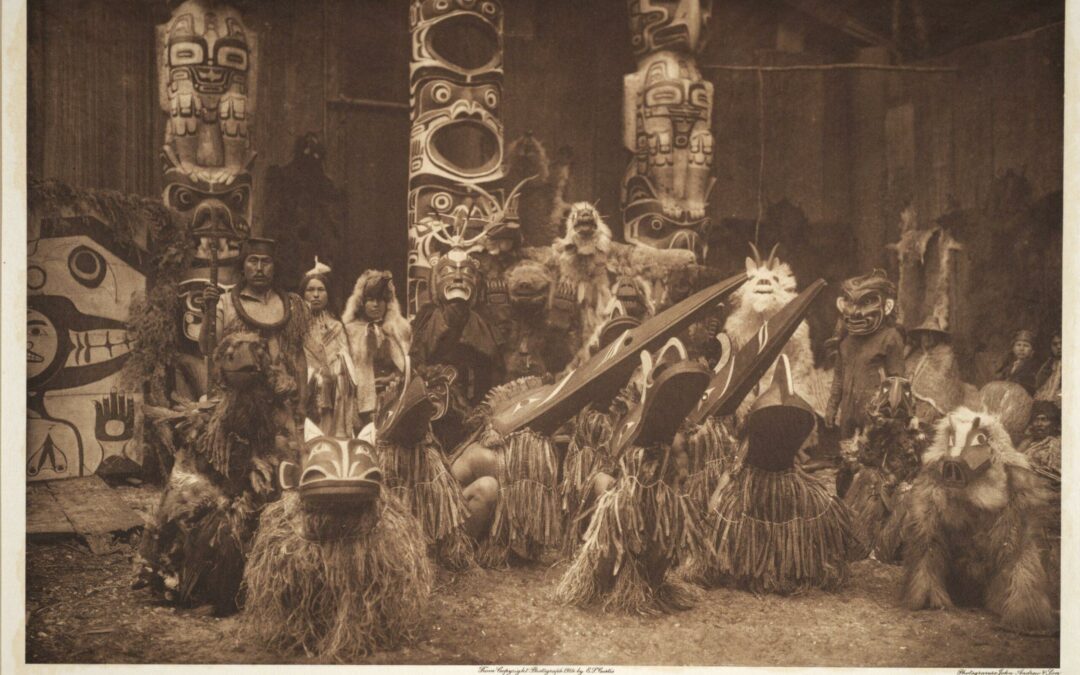
Peace-making ceremony, Sarawak
What is a ritual?

What is a ritual?


What is a ritual?

THE SACRED · 12 MIN READ

Exploring the structure, meaning and transformative power of ritual across cultures.

There is something strangely difficult about defining ritual. We recognize it almost immediately when we see it: incense burning before an altar, a body washed before burial, a bride crossing a threshold, pilgrims walking toward a shrine, candles placed around a birthday cake. Yet the moment we try to say precisely what makes these actions rituals, the category begins to blur.

Is repetition enough? Brushing our teeth is repetitive, but we do not usually call it ritual. Is symbolism necessary? A military salute is highly symbolic, but so is a national flag. Does ritual require belief in gods or supernatural forces? Clearly not. Graduations, presidential inaugurations, courtroom procedures and secular memorials all contain actions that scholars have described as ritualized. Must a ritual be ancient? Again, no. Rituals can be invented, abandoned, revived, borrowed, institutionalized or transformed within a generation.

The problem is revealing because “ritual” is not simply the name of a particular kind of activity. It is a category through which we have tried to understand a recurring human tendency: the transformation of ordinary actions into actions that seem to carry more meaning than their practical function can explain.

A candle produces light. A candle lit beside the photograph of someone who has died does something else. Water cleans the skin. Water used in baptism, ablution or ritual purification participates in another order of meaning. Walking gets us from one place to another. A pilgrimage may involve walking for hundreds of kilometres precisely when faster forms of transportation are available.

The material action has not disappeared. The candle still burns, the water still touches the body, the feet still move across the ground. What changes is the network of meanings, expectations, memories, relationships and cosmologies in which the action takes place.

This is where ritual becomes anthropologically interesting. Human beings do not simply inhabit physical environments. We inhabit worlds of significance, and ritual is one of the ways those worlds become tangible.


Peace-making ceremony, Sarawak


 AN ORDINARY ACTION BECOMES SOMETHING ELSE

One of the temptations when writing about ritual is to search for the thing that all rituals have in common. Anthropologists, sociologists, historians of religion and scholars of ritual have spent more than a century trying to do exactly that, without arriving at a single definition capable of containing every case.

Some approaches emphasize repetition and formalization. Others focus on symbolism, sacredness, performance, tradition, embodiment or social order. Catherine Bell, whose work became particularly influential in ritual studies, challenged the assumption that “ritual” could simply be isolated as a universal type of behaviour with a fixed essence. Her concept of ritualization shifted attention toward the ways certain actions are strategically differentiated from ordinary actions: performed more formally, more deliberately, in a special place, at a particular time, with particular bodies, gestures or objects.

This distinction is useful because ritual often begins not with an extraordinary act, but with an ordinary act made different.

Eating becomes a feast.

Walking becomes pilgrimage.

Washing becomes purification.

Silence becomes observance.

Giving becomes offering.

Movement becomes procession.

The difference may be created by repetition, by setting, by authority, by inherited tradition, by the presence of witnesses, or simply by the understanding that this action matters differently here.

Consider entering a sacred space. Depending on the tradition, you may remove your shoes, cover your head, uncover your head, wash your hands, bow, kneel, touch the threshold, ring a bell or move around the space in a prescribed direction. None of these gestures is inherently sacred in isolation. Their significance emerges relationally. The body is being taught that one kind of space has ended and another has begun.

Ritual, in this sense, does not merely communicate an idea about the world. It organizes an encounter with the world.


BEFORE AND AFTER

Some of the most influential thinking about ritual emerged from studying moments of transition.

In 1909, the French ethnographer and folklorist Arnold van Gennep published Les Rites de Passage. He was interested in ceremonies surrounding changes of status: birth, initiation, marriage, death, territorial passage and other transitions through which a person moves from one recognized social position to another.

Across very different societies, Van Gennep identified a recurring tripartite structure: separation, transition and incorporation.

First, a person is symbolically detached from a previous state. Then comes an intermediate period in which ordinary classifications may be suspended or destabilized. Finally, the individual is incorporated into a new position.

The framework is elegant, sometimes almost suspiciously so, and it should not be mistaken for a universal law governing every ritual. But it gave anthropology a powerful vocabulary for thinking about something human societies repeatedly confront: change is biologically inevitable, but its meaning is not.

A child grows older whether or not a coming-of-age ceremony occurs. Two people can love each other without a wedding. A body dies regardless of whether a funeral is performed. Yet societies repeatedly surround such transitions with elaborate symbolic forms.

Why?

One answer is that biological change and social change are not identical.

A person can be physically mature without being socially recognized as an adult. Someone can be biologically dead while remaining socially present in complicated ways. Marriage can alter kinship, inheritance, obligation, sexuality, property, status and belonging. Birth creates not only a new organism but new parents, grandparents, siblings and relationships.

Ritual helps negotiate these transformations. It gives a before and an after to changes that might otherwise remain ambiguous.

And between those two states lies the threshold.


THE STRANGE WORLD OF THE THRESHOLD

Victor Turner would later develop Van Gennep’s transitional stage into one of anthropology’s most influential concepts: liminality.

The word derives from the Latin limen, threshold.

During a liminal period, the participant may occupy an ambiguous position. They are no longer entirely what they were, but they have not yet become what they will be. Familiar distinctions can temporarily weaken. Ordinary clothing may be removed. Names may change. Hair may be cut. Participants may fast, isolate themselves, undergo ordeals, receive teachings or move outside the ordinary spaces of social life.

The threshold is powerful precisely because it is unstable.

Turner became interested in the forms of intense togetherness that can emerge in such spaces, which he described through the concept of communitas: a mode of social relationship in which ordinary distinctions of rank and status may temporarily recede.

The idea has had enormous influence far beyond anthropology. It is now used to describe festivals, pilgrimages, retreats, political upheaval, travel and even periods of personal uncertainty. That popularity has also diluted the term. Today almost any ambiguous experience risks being described as “liminal.”

The anthropological insight is more precise.

Ritual can create deliberately structured conditions in which ordinary social identity is temporarily rearranged.

This helps explain why so many rituals involve displacement. The initiate leaves the village. The pilgrim leaves home. The monk enters the monastery. The bride crosses a threshold. The procession moves through the city. The deceased is carried from the world of the living toward another socially recognized condition.

Transformation is given a geography.

You leave one place as one person and return differently recognized.


WHY THE BODY?

What becomes striking when looking across ritual traditions is how rarely major transformations are left entirely to thought.

Human beings could theoretically mark a marriage by updating a document. We could acknowledge death intellectually. We could decide privately that childhood has ended. Yet rituals repeatedly recruit the body.

Bodies kneel, stand, bow, turn, fast, feast, dance, chant, bleed, wash, carry, touch, abstain, inhale smoke, wear particular clothing, ingest substances, walk enormous distances or remain perfectly still.

This is not incidental.

Ritual meaning is often produced through sensation.

Incense changes the smell of a room. Bells reorganize its acoustic space. Fasting changes hunger and attention. Repetitive movement alters bodily awareness. Darkness reduces ordinary visual orientation. Costume changes how the body is perceived by oneself and others. Collective chanting transforms breathing into something shared.

A ritual is therefore not simply an idea represented through symbolic gestures. Often the gesture is part of the thinking.

The body learns something through doing.

This is one reason purely intellectual explanations of ritual can feel strangely incomplete. You can describe a pilgrimage in extraordinary detail and still know very little about what it means to walk for days toward a place you believe to be sacred. You can analyse a chant semantically without understanding what thousands of repetitions do to breath, attention and perception.

Ritual knowledge is frequently embodied knowledge.

The participant does not only know about the ritual.

They know it in their knees, lungs, skin, exhaustion, anticipation and memory.


REPETITION CHANGES THE ACTION

Repetition is one of ritual’s most recognizable features, but it is easy to misunderstand.

From an efficiency-oriented perspective, repeating an action whose informational content is already known appears redundant. If a prayer has been said once, why say it one hundred and eight times? If a procession has circled a shrine once, why circle it again? If the story is already familiar, why retell it every year?

Because repetition does not necessarily exist to communicate new information.

It can change the quality of attention itself.

The first repetition is not experienced like the fiftieth. A repeated movement becomes increasingly predictable. Decisions diminish. The body anticipates the sequence. In collective ritual, participants may begin to breathe, sing, step or sway together. Time may feel altered because novelty no longer divides experience in the usual way.

This is where ritual begins to intersect with another area that has fascinated anthropologists: altered states of consciousness.

Across different societies, ritual environments may incorporate rhythmic drumming, chanting, dancing, hyperventilation, sensory restriction, sleep deprivation, fasting, psychoactive substances, pain, prolonged concentration or collective emotional intensity. These techniques are not interchangeable, and it would be reductive to treat possession, meditation, trance, mystical experience and psychedelic states as versions of the same phenomenon. Their meanings are shaped by radically different cultural frameworks.

Still, the recurrence of techniques that reorganize attention and bodily experience is difficult to ignore.

Ritual does not only tell participants what a culture believes.

Sometimes it changes the conditions under which reality is perceived.


WHEN THE SELF BECOMES POROUS

This is where ritual connects closely with the question that has been running through much of my research: what happens when the ordinary boundaries of the self become less stable?

In many ritual settings, the individual is not the primary unit of experience.

People sing together. Dance together. Grieve together. Walk together. Eat together. Enter silence together. Their bodies become coordinated through rhythm, gesture and attention.

Émile Durkheim, writing in The Elementary Forms of Religious Life, was deeply interested in the heightened emotional states generated by collective ritual. His concept of collective effervescence attempted to describe moments when the energy of the gathering appears to exceed that of any single participant.

For Durkheim, this was crucial to understanding religion. The sacred was not merely an abstract set of beliefs about supernatural beings. It was generated and renewed through collective social life.

That proposition remains provocative.

What if some experiences interpreted as encounters with something beyond the individual are inseparable from the extraordinary things human bodies can experience when gathered together?

This does not settle the metaphysical question of whether anything transcendent exists. Anthropology cannot adjudicate that question. What it can observe is that collective practices can profoundly alter how people experience themselves.

The “I” can become less central.

The crowd moves.

The chant continues.

The dancer stops monitoring every movement.

The distinction between acting and being acted through may become unstable.

In possession traditions, this instability can be culturally interpreted through the arrival of a deity, spirit or ancestor. Elsewhere it may be described as ecstasy, surrender, absorption, flow, communion or trance.

The experience is never only physiological and never only cultural. Bodies and meanings are entangled.


RITUAL MAKES THE INVISIBLE MATERIAL

There is another function of ritual that interests me: it gives material form to things that otherwise have no body.

Grief has no shape.

Belonging has no shape.

Memory has no shape.

A promise has no shape.

Neither does forgiveness, ancestry, transition, devotion or mourning.

Yet humans continually give these invisible realities objects, gestures, places and durations.

A ring makes a promise wearable.

A grave gives absence a location.

An altar gives devotion an architecture.

An offering transforms gratitude into matter.

A procession gives collective memory a route through the city.

This is especially visible around death.

Death creates a peculiar rupture because someone who occupied a stable position in the social world is suddenly absent from it. The biological event may happen in an instant, but the social transformation is slower and far more complicated. A person must become a deceased person, an ancestor, a memory, a name, a photograph, a presence of another kind.

Funerary rituals across cultures differ so radically that speaking of “the human response to death” requires caution. Bodies may be buried, cremated, exposed, embalmed, dismembered or otherwise treated according to specific cosmologies. Mourning may involve silence or wailing, white clothing or black clothing, isolation or enormous gatherings.

The differences matter.

Yet ritual repeatedly appears at precisely the point where ordinary language struggles.

Something irreversible has happened.

What do we do now?

We wash the body.

We prepare food.

We gather.

We light something.

We carry something.

We speak names.

We repeat words.

We sit through the night.

The ritual does not abolish death and does not necessarily explain it.

It gives grief a sequence of actions through which it can move.


RITUAL AND MEMORY

Ritual also changes our relationship with time.

A commemorative ritual does something peculiar: it allows an event that has already happened to become present again.

Every year, the date returns.

The candles are lit again.

The story is told again.

The names are spoken again.

In this sense, ritual time is not always linear. It can be recursive. The past is not simply behind us; it is periodically reactivated through performance.

Religious calendars make this particularly visible. Festivals, fasts, holy days and commemorations divide the year into qualitatively different forms of time. One day is not simply another twenty-four-hour unit. It carries a story, an obligation, a memory or a sacred association.

This is very different from the abstract time of the clock.

The clock tells us that every hour contains sixty minutes.

Ritual tells us that not every hour means the same thing.

A vigil at midnight is not interchangeable with a meeting at noon. The first day of a new year is chronologically adjacent to the last day of the previous one, yet entire cultures build ceremonies around the crossing between them.

Ritual gives time texture.


THE OBJECT IS NEVER JUST AN OBJECT

The same process occurs with things.

A stone is a stone until it is not.

A piece of cloth becomes a flag. Water becomes holy water. Bread becomes sacrament. Beads become a rosary or mālā. A bone becomes a relic. A mountain becomes a pilgrimage destination.

Nothing about the material composition alone explains the transformation.

This does not mean that sacredness is “imaginary” in the dismissive sense. Social realities are capable of producing very real consequences. A banknote is physically paper yet operates within an enormous shared system of value. A border may be invisible in the landscape and still determine whether a body may cross it.

Sacred objects operate through different systems of meaning, but the comparison reminds us that humans routinely inhabit realities that cannot be reduced to physical properties.

Ritual is one of the processes through which such realities are maintained.

An object is touched differently.

Stored differently.

Carried differently.

Displayed differently.

Destroyed differently.

The behaviour around the object reveals that its status has changed.


RITUAL IS ALSO POWER

There is a danger in writing beautifully about ritual.

It becomes very easy to romanticize it.

Contemporary spiritual culture often presents ritual as inherently meaningful, healing, ancient or authentic. But anthropology makes such innocence difficult to sustain.

Ritual has always been entangled with power.

Who is allowed to perform the ceremony? Who may enter the sacred space? Who speaks and who remains silent? Who occupies the centre? Who watches from outside? Who is considered pure enough to participate? Who determines the correct interpretation?

Ritual can establish hierarchy as effectively as it can create belonging.

Kings are crowned through ritual. Soldiers are initiated through ritual. Nations commemorate themselves through ritual. Courts, universities and political institutions all rely on highly formalized ceremonial behaviour.

Uniforms, robes, flags, titles, seating arrangements, scripted language and spatial organization make authority visible.

Ritual can naturalize social arrangements by presenting them not merely as practical conventions but as part of a larger moral, ancestral, political or cosmic order.

This is why ritual cannot simply be equated with healing.

It can comfort and exclude.

Liberate and discipline.

Create solidarity and reinforce inequality.

Challenge authority and legitimate it.

The same ritual may even do several of these things simultaneously depending on who is participating and from what position.

The question is therefore not simply, What does this ritual mean?

We also have to ask: What does this ritual do, and for whom?

WHO GETS TO CALL SOMETHING A RITUAL?

There is another complication.

“Ritual” is itself a scholarly category with a history.

European observers often used terms such as ritual, religion, magic, superstition and custom to classify practices encountered elsewhere. These categories were not neutral. They emerged within particular intellectual and colonial histories.

Practices that made perfect sense within their own cosmological worlds could be extracted from those worlds and described as exotic “rites.”

Meanwhile, many highly ritualized practices within European institutions were treated simply as civilization, law, etiquette or tradition.

Anthropology has spent decades confronting the asymmetry embedded in some of its foundational categories.

This matters especially today, when rituals move extraordinarily quickly across cultures.

A ceremony encountered in India, Peru, Bali or Japan can be photographed, aestheticized, renamed and incorporated into a retreat on another continent within months. Its original theological, social or historical context may disappear while its visual form survives.

The result may still feel meaningful to the new participants.

But meaning alone does not erase history.

Taking ritual seriously means asking where a practice comes from, who carries it, what relationships sustain it and what happens when it is detached from those relationships.

Not every borrowed practice is automatically exploitation. Cultures have always exchanged forms, symbols and techniques.

But neither is every act of borrowing innocent.

Context matters.


HAVE WE BECOME LESS RITUALISTIC?

Modern secular societies often describe themselves as having moved away from ritual.

I am increasingly unconvinced by this.

What seems to have changed is not necessarily the existence of ritualized behaviour, but the institutions and objects around which it gathers.

Consider graduation. Participants wear archaic clothing, enter according to prescribed order, listen to formal speeches, cross a stage, receive a symbolic object and leave with a transformed social status.

Consider a courtroom. Particular people occupy particular places. Clothing signifies authority. Participants stand and sit at designated moments. Formulaic language matters. Certain speech acts have legal consequences.

Consider sport. Colours, songs, collective gestures, heroes, sacred grounds, annual calendars, rivalries, pilgrimages to stadiums, moments of silence and eruptions of collective emotion.

Consider national life. Flags are raised, anthems sung, monuments visited, leaders inaugurated, the dead commemorated.

The sacred has not simply disappeared.

Its forms have migrated.

Even private life contains actions that sit somewhere between habit and ritual: morning coffee prepared in exactly the same way, the objects arranged before beginning work, a song played before going on stage, a Sunday meal repeated across generations.

We should be careful not to call every routine a ritual. If everything becomes ritual, the concept loses analytical value.

But the ambiguity itself is interesting.

At what point does repetition acquire symbolic weight?

When does habit become ceremony?

When does an action stop being merely functional and begin to tell us who we are?


THE RISE OF PERSONAL RITUAL

Something else has happened in contemporary culture.

Ritual has increasingly become individualized.

Historically, many rituals were inherited rather than designed. You participated because your family, village, religion or society already possessed the form.

Today, particularly in highly individualized societies, people often construct their own rituals.

Morning rituals.

New moon rituals.

Self-care rituals.

Breakup rituals.

Digital detox rituals.

Ceremonies for transitions that established institutions no longer recognize.

There is something revealing here.

The decline of shared ritual structures has not eliminated the desire for ritual. In some contexts it may have intensified it.

People still want thresholds.

They still want beginnings and endings to feel different.

They still want objects and gestures capable of holding experiences that ordinary language cannot contain.

But increasingly, the individual must invent the container.

This produces freedom, but also a strange burden.

If inherited ritual tells us, This is what we do when someone dies, individualized culture often asks, What would feel meaningful to you?

The second question sounds liberating.

During profound grief, it can also be exhausting.

Sometimes ritual’s power may come precisely from the fact that we did not invent it.

The form already exists when we no longer know what to do.


WHAT HAPPENS WHEN THERE IS NO RITUAL?

This question has stayed with me.

Modern life contains enormous transitions for which we possess surprisingly few shared forms.

A friendship of twenty years ends.

A person leaves the city where they became themselves.

A woman enters menopause.

Someone abandons a religion.

A relationship dissolves without marriage or divorce.

A person recovers from a long illness but cannot return to who they were before it.

A career collapses.

A body changes.

A home is sold.

A version of the self quietly ends.

These transformations can be psychologically enormous while remaining socially almost invisible.

There may be no ceremony, no witness, no period of separation, no recognized threshold.

You answer emails the next morning.

Life continues.

Van Gennep’s old framework becomes unexpectedly resonant here. Not because we should artificially create ceremonies for every inconvenience, but because it raises a deeper question: what happens when transformation occurs without social form?

Perhaps some of the contemporary fascination with retreats, circles, ceremonies, pilgrimages and ritual practices emerges from this absence.

Not necessarily because modern people have suddenly rediscovered “ancient wisdom.”

Something simpler may be happening.

We still need ways to mark that one thing has ended and another has begun.


RITUAL DOES NOT HAVE TO WORK IN ORDER TO MATTER

There is a final paradox.

People sometimes ask whether rituals “work.”

The question assumes that ritual should produce an outcome in the same way a technique does.

Does meditation lower stress?

Does this ceremony heal trauma?

Does prayer change the event?

Does the rite produce transformation?

But ritual may operate within another register entirely.

A funeral can be devastating and still be meaningful.

A wedding does not guarantee a marriage will endure.

An initiation does not ensure wisdom.

A pilgrimage may end in disappointment.

Ritual is not necessarily effective because it produces the emotional state we hoped for.

Its significance may lie in giving form to an encounter whose outcome cannot be controlled.

This is especially visible in rituals around uncertainty.

Humans have historically performed ceremonies before voyages, harvests, battles, births and dangerous transitions precisely when the future could not be guaranteed.

The ritual did not eliminate uncertainty.

It created a way to enter it.

That distinction feels increasingly important.

Modern culture tends to evaluate practices according to measurable outcomes. Did it work? Did I improve? Did I heal? Did I become calmer, happier, more productive?

Ritual may belong to a different logic.

Sometimes the point is not to control what happens next.

It is to acknowledge that something matters enough to be marked.


THE THRESHOLD

After reading about ritual for long enough, I find myself returning not to a definition but to an image: the threshold.

Ritual creates thresholds where ordinary life might otherwise appear continuous.

Before and after.

Inside and outside.

Living and dead.

Child and adult.

Profane and sacred.

Known and unknown.

The boundaries are culturally produced, but that does not make them insignificant. Human beings live through distinctions of this kind. We need ways to recognize when they shift.

This may be why ritual has survived extraordinary transformations in religion, technology, politics and social organization. Its forms change because the worlds around it change. Some rituals disappear. Others are revived. New ones emerge around objects our ancestors could never have imagined.

The deeper impulse remains recognizable.

When something matters profoundly, humans rarely leave it entirely unmarked.

We light something.

We wear something.

We remove something.

We gather.

We walk.

We repeat words.

We become silent.

We cross from one side to another.

And through these actions, an invisible transformation acquires a visible form.

A ritual cannot stop time, reverse death or guarantee transformation. It cannot resolve every ambiguity it encounters.

But it can draw a line through experience and say:

something was different before this.

And after it,

we will relate to the world differently.


TO GO FURTHER

Arnold van Gennep, The Rites of Passage (1909)
The foundational study of rites surrounding transitions in social status, and the source of the separation, transition and incorporation framework.

Émile Durkheim, The Elementary Forms of Religious Life (1912)
A foundational sociological examination of religion, collective ritual and the distinction between sacred and profane.

Victor Turner, The Ritual Process: Structure and Anti-Structure (1969)
An influential development of Van Gennep’s work, particularly around liminality and communitas.

Catherine Bell, Ritual Theory, Ritual Practice (1992)
A major critique of attempts to treat ritual as a stable, universal category, introducing the influential concept of ritualization.

Ronald L. Grimes, The Craft of Ritual Studies (2014)
A broad contemporary exploration of how rituals are performed, interpreted, invented and studied.

CONTINUE THE INQUIRY →